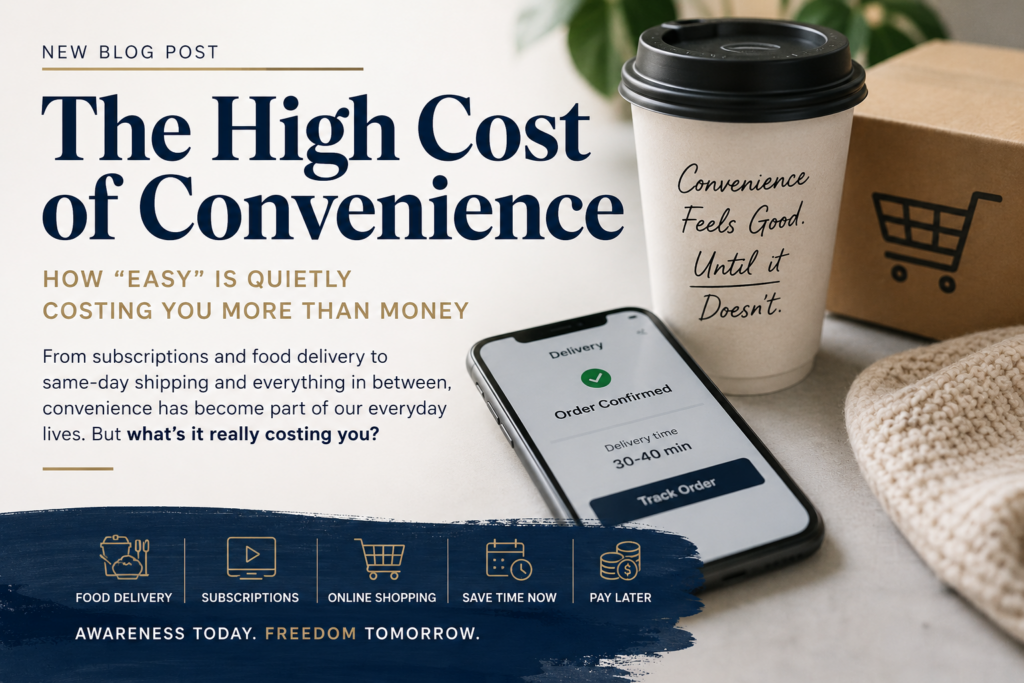
The high cost of Convenience
When “Easy” Quietly Becomes Expensive
We live in a world built around speed.
Tap the app.
Click the button.
Skip the line.
Upgrade the shipping.
Grab dinner on the way home.
Convenience has become so normal that most people never stop to ask what it’s actually costing them.
And I’m not just talking about money.
I work with a lot of couples who make good money but still feel financially stuck. Most of them are hardworking, responsible people. They aren’t reckless with money. They’re simply living in a culture where convenience has quietly become the default setting.
And little by little, it starts stealing their margin.
Convenience No Longer Feels Like a Luxury
At one point, food delivery was reserved for pizza night. Same-day shipping sounded luxurious. Coffee shops were occasional treats. Financing phones, furniture, and vacations wasn’t normal.
Now these things feel expected.
That’s what makes this so dangerous financially.
We no longer even recognize many of these things as conveniences because they’ve become so common and adopted into everyday life.
Convenience became standard.
Standard became expectation.
Expectation became entitlement.
And when spending feels normal, people stop evaluating the cost.
Why This Is Happening
Modern life is moving fast.
Both parents are often working. Kids have practices, games, and packed schedules. Homes still need cleaned. Lawns still need maintained. Meals still need prepared. Laundry still piles up.
So convenience becomes survival.
And honestly, sometimes it needs to be.
This isn’t about shaming people for using grocery pickup or ordering takeout after a long day. Convenience can absolutely serve a purpose.
But when life gets too fast for intentionality, people slowly begin outsourcing nearly everything:
their meals,
their time,
their planning,
their organization,
and eventually even their financial decision-making.
That’s where the leaks begin.
Americans Are Spending More Than They Realize
Studies suggest Americans are spending thousands of dollars every year on convenience-driven purchases.
According to CouponFollow, Americans spend around $150 per month — or roughly $1,800 per year — on convenience-related services and purchases.
Subscription spending has exploded too. Research shows the average household spends approximately $219 per month on subscriptions, totaling more than $2,600 annually.
Food delivery alone is estimated to cost many Americans over $1,500 per year.
The scary part?
Most people no longer view these expenses as luxuries.
They just feel like life.
The Everyday “Conveniences” We Rarely Question
Food & Shopping
- Food delivery apps
- Eating out multiple times a week
- Pre-packaged snacks and meals
- Grocery pickup and delivery
- Coffee runs every morning
- Convenience store purchases
Technology & Subscriptions
- Streaming subscriptions no one uses
- App subscriptions
- Constant phone and tech upgrades
- One-click impulse purchases
- Next-day shipping fees
Lifestyle Convenience
- House cleaning services
- Lawn care services
- Laundry services
- Storage units full of unused stuff
- Disposable products instead of reusable ones
Financial Convenience
- Carrying debt because “payments are easier”
- Using credit cards to bridge poor planning
- Buy now, pay later programs
- Financing furniture, phones, and vacations
- Paying ATM fees instead of planning ahead
Again, none of these things alone destroy a financial plan.
But together?
They create pressure.
Stress.
A lack of margin.
Financial anxiety.
Relationship tension.
And eventually that feeling of:
“We make good money… so why does it still feel tight?”
Most Financial Stress Isn’t an Income Problem
One of the biggest things I teach couples is this:
Most financial stress is usually not an income problem.
It’s a planning problem.
When you plan meals, you spend less on takeout.
When you prepare ahead, you avoid convenience fees.
When you build systems, you stop overspending emotionally.
When you create margin, emergencies stop controlling your life.
Planning creates peace.
Convenience often creates temporary relief that turns into long-term stress.
Ask Yourself This
Where has convenience quietly become expensive in your life?
Not just financially.
Emotionally too.
What habits are stealing your margin?
What areas simply need better planning?
What “easy buttons” are actually keeping you stuck?
Because sometimes the fastest way forward financially is slowing down long enough to become intentional again.
Dream Big. Live Free.
Sources & Research
- CouponFollow Convenience Spending Survey
- Subscription Economy Spending Research
- CloudKitchens Food Delivery Statistics
- Empower – The Cost of Convenience and Food Delivery
👉 Book a Free 30-Minute Call
No pressure.
No sales pitch.
Just a conversation.
Just support.
Just the first step toward a stress free, healthy life.
You Can Do This — And You Don’t Have to Do It Alone
No matter where you’re starting today, you can build:
- stability
- confidence
- peace
- unity in your marriage
- a foundation for your kids
- margin for what matters
- room to dream again
And I’ll be right here walking with you, encouraging you, and reminding you that you are capable of more than you think.
Dream Big. Live Free.
About the Author
TJ Recinella (Owner/ Founder of TJR Financial Coaching)

TJ is a financial coach that helps couples who earn good money but feel like they have nothing to show for it. They’re unsure about their financial situation and frustrated that they aren’t where they should be. He provides a path forward and helps them believe in themselves so they can get unstuck, gain confidence, take control and change their financial future.
Let’s chat—book a free call:
.