
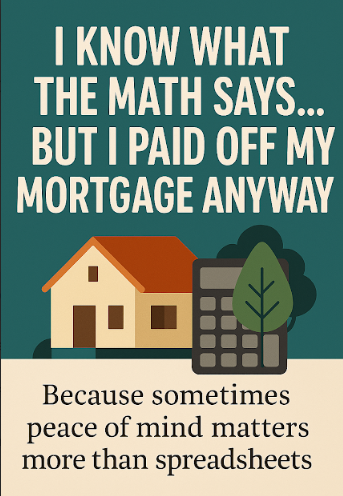
I Know What the Math Says… But I Paid Off My Mortgage Anyway
Because sometimes peace of mind matters more than spreadsheets
Let’s get this out of the way: I know what the math says. I’ve seen the financial gurus with their colorful charts, neat spreadsheets, and maybe a double shot of espresso, explaining how I could’ve “outperformed” my mortgage rate by investing the money instead.
And honestly? They’re probably right. On paper, it makes more sense to keep a low-rate mortgage and put extra cash into the market. Historically, the S&P 500 returns about 7–10% annually—much more than most mortgage rates these days, (Source: Investopedia)
But life doesn’t happen in spreadsheets.
The Emotional Side of Money (What the Charts Don’t Show)
I didn’t pay off my mortgage because I can’t crunch numbers. I paid it off because I value freedom, security, and peace of mind. You can’t easily plug those into a spreadsheet.
Debt hits everyone differently. For some, it’s just a number. For me, it was a weight. My financial advisor thought I was a little nuts, but after hearing about our family’s journey and why we needed that sense of security, they got it. We worked together on a payoff plan that made sense for us tax-wise and didn’t jeopardize our future.
Honestly? I sleep better at night knowing my home is paid for. When headlines warn of layoffs, I breathe easier. If something ever happened to me, I know my family has a roof over their heads.
Could I have made more by investing? Maybe. But my goal wasn’t to squeeze every bit of return out of life—it was to build stability, breathe easier, and keep my options open.
It’s Not Just About the Math—it’s Your “Why”
Personal finance is—well—personal. There’s no universal answer. It comes down to your:
- Risk tolerance
- Financial discipline
- Long-term goals
- Emotional triggers
- Your “why”—what motivates you
For some, leveraging a mortgage and investing works perfectly. If you’re disciplined and thrive on chasing higher returns, then keeping the mortgage may be the smarter move.
But for others (like me), the peace of mind from being totally debt-free is worth more than an extra percent or two.
Also, let’s not forget: the “math says invest” argument assumes you actually invest that extra money—which brings me to my next point.
The Discipline Most People Overlook
In theory, yes—invest the difference and come out ahead. In reality, most people don’t. Instead, that extra cash often goes to new cars, side-by-sides, vacations, and whatever Target or Amazon throws your way.
In fact, only 45% of Americans consider themselves financially disciplined, and that number is declining (Source: Rethinking65) Nearly half of U.S. adults don’t invest at all—whether due to lack of knowledge, fear, or competing expenses (Source: InvestmentNews).
So, while the math adds up if you stick to the plan, most people simply don’t.
That’s why I paid off my mortgage—not just for the numbers, but for peace of mind and to avoid temptation. For me, a paid-off house means a rock-solid foundation.
Bottom Line: Do What Helps You Sleep at Night
At the end of the day, personal finance isn’t just about numbers—it’s about aligning your choices with your values, goals, and what lets you sleep soundly.
For me, that meant paying off the house. For you, maybe it’s investing and keeping the mortgage. Both can be right. Just make it intentional.
Don’t blindly follow what “the math” says—or what anyone else tells you. Run the numbers, but also check in with your heart. Do what brings you peace.
Because in the real world, personal finance isn’t just about math—it’s about living the life you want.
Want to talk through your own situation? I love helping people weigh the numbers and the emotions. Let’s chat—book a free call: Schedule with me here.Blog Posts
About the Author
TJ Recinella (Owner/ Founder of TJR Financial Coaching)

TJ helps couples who earn good money but feel like they have nothing to show for it. They’re unsure about their financial situation and frustrated that they aren’t where they should be. He provides a path to help them get unstuck, gain confidence, and change the financial future of their families.
.